




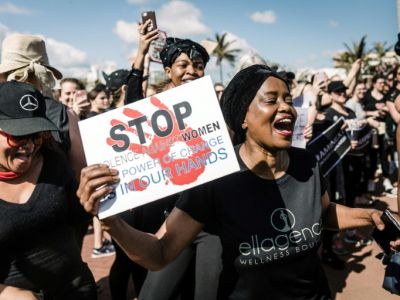
On the occasion of the International Day for the Elimination of Violence against Women and Girls, observed every 25 November, the organization SHE Rights is sounding the alarm: since the year 2000, violence against women has seen almost no global decline.In a public statement, SHE Rights expresses concern that “one in three women continues to experience intimate partner or sexual violence in her lifetime, and this figure has remained almost unchanged for 26 years.” The pace of reduction is described as “desperately slow,” estimated at only 0.2% per year over the past two decades.The organization stresses that these statistics are likely vastly underestimated due to stigma, fear, and multiple barriers that prevent reporting. “Psychological violence is among the least reported,” notes Shobha Shukla, coordinator of SHE Rights.A recent report from the World Health Organization (WHO) also highlights an alarming contradiction: even as scientific evidence on the effectiveness of prevention strategies continues to grow, international funding for such programs is declining.In 2022, only 0.2% of global development aid was allocated to preventing violence against women—an amount that has further decreased in 2025.WHO Director-General Dr. Tedros Adhanom Ghebreyesus emphasizes that this form of violence remains “one of the oldest and least challenged injustices in humanity,” adding that no society can claim to be “just or safe” when half of its population lives in fear.Several international leaders insist on the need to place the right to health—including sexual and reproductive health—at the center of public policy.According to Dr. Tlaleng Mofokeng, UN Special Rapporteur on the Right to Health, investing in equity and in rights-based movements is essential. She warns against regressive policies and growing attacks on women’s rights: in 2024, nearly one in four countries experienced setbacks in the protection of women’s rights.Alison Drayton, Assistant Secretary-General of CARICOM, denounces a “weakening of solidarity” that threatens sexual and reproductive health and rights across many regions.For Aysha Amin, founder of Baithak in Pakistan, the consequences are particularly severe for women in rural communities and climate disaster–affected areas. Lack of access to health services, water, and sanitation further exposes women and adolescent girls to health risks and various forms of violence.Supported by several international actors, SHE Rights calls on governments to strengthen public action and invest sustainably in prevention and protection. The key priorities identified are:Supported by several international actors, SHE Rights calls on governments to strengthen public action and invest sustainably in prevention and protection. The key priorities identified are:• Strengthening evidence-based prevention programs, particularly those led by communities.• Improving health, legal, and social services for survivors.• Investing in reliable data systems to track progress and protect the most vulnerable groups.• Enforcing laws and policies that promote the empowerment of women and girls.As the world approaches Universal Health Coverage (UHC) Day on December 12, organizations remind us that gender equality and access to healthcare are essential conditions for a more just and safer world.Babacar Sene Journal Agropasteur