

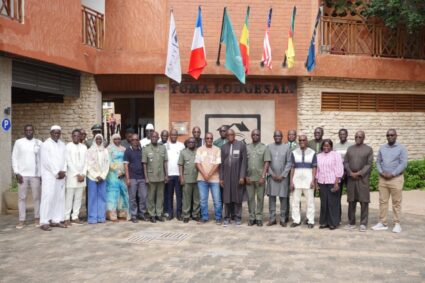




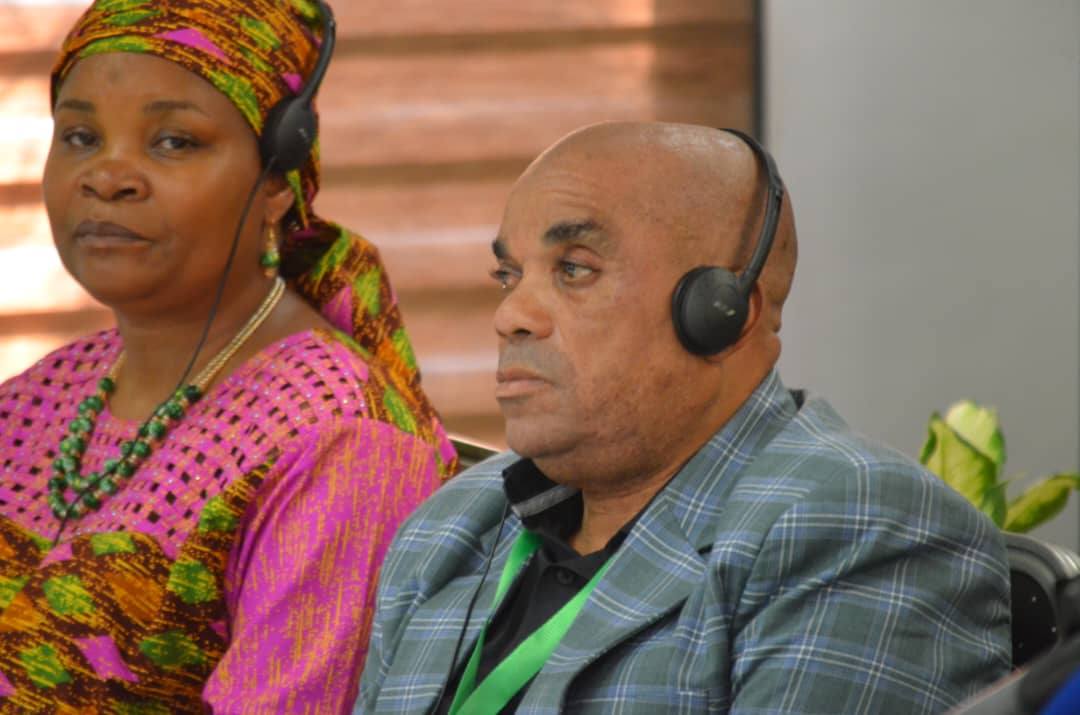
Following the 7th General Assembly of the Pan-African Farmers’ Organization (PAFO), held in Dakar, the newly elected leadership team held a press conference to present its vision, priorities, and the main challenges of the new mandate.
PAFO is now led by Mr. Phenias Gumede, President, supported by Ms. Elizabeth Nsimadala, Treasurer General, and Mr. Kolyana Falebele, President of PROPAC.
Speaking at the conference, the new PAFO President, Mr. Phenias Gumede, described the Assembly as “one focused on consolidation and governance.” He emphasized that this General Assembly “marks a decisive turning point in the life of the organization and reflects a renewed commitment to respecting the rules, laws, and rights that govern PAFO, while opening a new phase centered on consolidating achievements and strengthening governance.”
According to him, the priorities of the new mandate will include strengthening the role of young people and women within farmers’ organizations, taking into account the contributions of delegates and partners, and ensuring the effective implementation of decisions adopted during the General Assembly.
Mr. Gumede reassured journalists of the openness of the new leadership team, stating:
“We are counting on all stakeholders, including the media, whose role is essential for the success of our shared mission.”
He also announced that a roadmap and an action plan have already been developed. The key challenge now, he said, is to move into action by operationalizing and prioritizing planned activities in order to strengthen PAFO and contribute effectively to Africa’s food sovereignty.
Taking the floor in turn, Ms. Elizabeth Nsimadala, who is also Regional President of the Eastern Africa Farmers Federation and a member of PAFO’s Board of Directors, echoed these remarks.
She stressed the importance of holding the General Assembly every two years to allow members to meet, assess progress made, and draw lessons to improve the organization’s functioning. She praised PAFO’s journey, noting that this 7th General Assembly reflects years of foundational work carried out in service of African farmers.
According to the Treasurer General, documentation, evaluation, and capitalization of experiences will enable PAFO to reach higher levels, particularly in terms of good governance and improving the operating environment for member organizations. She announced that governance, sustainability, and inclusion are at the core of the new mandate.
Ms. Nsimadala highlighted several major achievements, including the creation of platforms dedicated to women and youth, as well as the formal integration of a youth representative and a women’s representative into PAFO’s decision-making bodies.
She also emphasized the need to disseminate and promote the many recommendations emerging from the Assembly in order to inform the implementation of the 2025–2030 strategic plan.
Key cross-cutting themes identified include advocacy, farmers’ organizations’ control over agricultural value chains, climate change, and the role of youth and women. In this regard, PAFO intends to strengthen digitalization, support the implementation and monitoring of African commitments—particularly the Maputo Declaration—and promote accountability as a key factor for success.
For his part, Mr. Kolyana Falebele, President of PROPAC, recalled PAFO’s pan-African vocation. He praised Senegal’s hospitality and the successful organization of the General Assembly, despite challenges faced over more than fifteen years.
According to him, the Dakar meeting made it possible to review progress achieved, assess the path traveled, and embrace a dynamic of performance. He noted significant advances, particularly in human and financial resources, thanks to partner support, research, governments, and the commitment of young people and women.
However, he stressed the need to strengthen advocacy for African agricultural policies, the CAADP, and commitments arising from the Maputo, Malabo, and Kampala Declarations, notably the allocation of 10% of national budgets to agriculture.
Babacar Sene Journal Agropasteur