

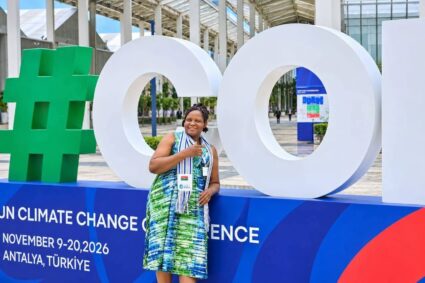
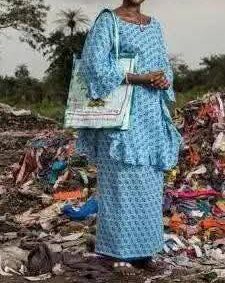

Honoured for Her Environmental Leadership Recognised with the prestigious Environmental Champion Award at The Gambia’s National Women & Girls Awards, Isatou Ceesay embodies women’s leadership and commitment to the fight against plastic waste. Through recycling, she has turned environmental protection into a powerful tool for women’s economic empowerment and social transformation within communities.In The Gambia, her name has become synonymous with the fight against plastic pollution. Isatou Ceesay, affectionately known as the “Queen of Recycling” and the “Queen of Green Africa,” has received another distinction recognising her environmental commitment and remarkable journey in the service of local communities.She was honoured with the Environmental Champion Award at the National Women & Girls Awards, in recognition of her leadership and contribution to environmental protection.Behind this distinction, however, lies a story of courage, vision and perseverance. It is the story of a woman who chose not to regard plastic waste as an inevitable problem, but rather as an opportunity to take action, innovate and sustainably transform people’s living conditions.From Plastic Waste to Economic OpportunitiesIsatou Ceesay’s commitment goes far beyond conventional waste collection and recycling activities. Her approach is rooted in a strong conviction: the fight against plastic pollution can also become a powerful instrument for economic development and social inclusion.By giving plastic waste a second life, she has helped create economic opportunities for women, encourage entrepreneurship and strengthen their financial independence.Her work has also helped change the way people perceive waste. What was once considered an environmental problem is gradually becoming a valuable resource capable of generating income, supporting local economic activities and restoring confidence among women who often face socioeconomic challenges.Through this approach, Isatou Ceesay demonstrates that the circular economy can become a powerful driver of social transformation when it is built on community initiatives and the active participation of women.Beyond Recycling: A Commitment to Environmental CitizenshipBeyond recycling, this Gambian environmental advocate promotes a broader philosophy of civic and environmental engagement. Her journey shows that environmental protection is not the exclusive responsibility of public policies, institutions or major international organisations. It also begins at community level, through local initiatives led by women and men determined to improve their immediate surroundings.By mobilising women and inspiring younger generations, Isatou Ceesay has helped foster environmental awareness based on collective responsibility, innovation and practical action.Her leadership is rooted precisely in her ability to turn an environmental concern into a social movement, bringing together nature conservation, wealth creation and the promotion of human dignity. An Award That Goes Beyond Individual RecognitionThe Environmental Champion Award therefore celebrates much more than one woman’s personal achievements. It also highlights the efforts of the many women and communities who, inspired by this initiative, are actively contributing to transforming their living environments.This distinction recognises a development approach in which environmental commitment is inseparable from economic empowerment and social justice.At a time when plastic pollution remains a major challenge for African countries, particularly in terms of waste management, ecosystem preservation and environmental health, Isatou Ceesay’s experience highlights the importance of local solutions and community-based leadership.The “Queen of Green Africa” thus carries a message that extends far beyond The Gambia’s borders: waste can be transformed into resources, challenges into opportunities, and individual commitment into collective action.Her crown now symbolises far more than an honorary distinction. It represents a struggle, a vision and a lasting commitment to building a cleaner, more responsible and more resilient Africa.Babaclimat / Journal Agropasteu