


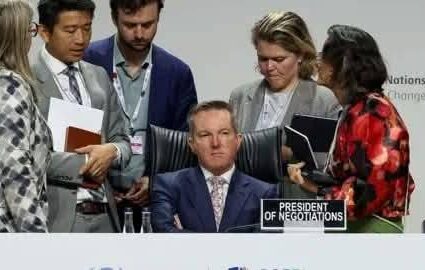


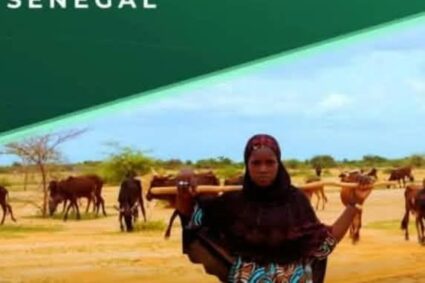

When Diplomatic Compromise Is No Longer Enough: Rethinking the Credibility, Equity and Effectiveness of Climate MultilateralismThis is the central message emerging from the Strategic Analysis and Reflection Note, a contribution by the NGO Africa Hope & Development (AfREDE), summarised below.The COP31 conference in Antalya takes place against a backdrop of growing concerns about the effectiveness of climate multilateralism. After several years of diplomatic negotiations, expectations among developing countries, particularly African countries and small island developing States, remain considerable.The diplomatic compromise that resolved the competition between Australia and Türkiye to host this conference was initially presented as a victory for multilateralism.However, the proceedings and outcomes of COP31 raise fundamental questions about the international system’s ability to translate political commitments into concrete responses to urgent climate challenges.The prolonged negotiations, disagreements over adaptation finance, difficulties surrounding the just transition and tensions witnessed during the closing plenary illustrate the limitations of a system in which the pursuit of consensus sometimes appears to take precedence over the search for solutions.The fundamental question therefore becomes: Can we continue to celebrate the diplomatic success of COP conferences when their outcomes fail to adequately address the needs of the most vulnerable populations?One of the most worrying lessons from this COP concerns the position afforded to African countries and their civil society organisations.Africa has historically contributed very little to global greenhouse gas emissions, yet remains particularly exposed to the consequences of climate change.The continent faces recurrent droughts, desertification, floods, coastal erosion, land degradation and food insecurity.Yet the effective participation of African stakeholders in international negotiations continues to face structural constraints.For many civil society organisations, participating in a COP represents a considerable financial investment, including:International air tickets and domestic travel;Visa fees and administrative formalities;Accommodation and meals;Local transportation;Communication and coordination costs;Mobilisation of human and institutional resources.Some organisations have to mobilise their own funds, seek support from partners or personally bear part of these expenses.This situation raises a major contradiction: organisations representing the most vulnerable communities sometimes have to make significant financial sacrifices to participate in negotiations whose outcomes do not necessarily guarantee tangible benefits for those same communities.It is therefore legitimate to question the actual cost of such participation and, above all, its effectiveness.The reported incident during the closing plenary, involving the interruption of Ghana’s intervention on behalf of the African Group, is a worrying signal.Inclusiveness cannot be reduced to the physical presence of delegations, the granting of accreditation or the opportunity to participate in side events.It must translate into:Respect for all delegations;Balanced representation in negotiating spaces;Genuine capacity to influence decisions;Serious consideration of proposals put forward by vulnerable countries;Effective participation of local and community-based organisations.Respect for the African Group, which brings together 54 States, should not be considered a diplomatic favour, but rather a fundamental requirement of multilateralism.African civil society must not be treated merely as a witness to international decisions. It must be recognised as an essential stakeholder in their formulation, implementation and monitoring.Climate Finance: A Major Weakness in the International Climate ProcessFinancing remains one of the main weaknesses of the international climate process.Developing countries expect predictable, accessible, additional and adequate financial resources to fund adaptation, mitigation, loss and damage, as well as the just transition.Article 9.1 of the Paris Agreement is particularly important. It establishes the obligation of developed countries to provide financial resources to developing countries to support their mitigation and adaptation efforts.The reported absence of any reference to this article in the final text on climate finance, as highlighted in analyses of COP31, deserves particular attention.This is not merely a drafting issue. It concerns historical responsibility, equity and trust among the Parties.Furthermore, announced financial commitments must not be confused with funds actually mobilised and disbursed.For local communities, progress must be measured through tangible results:Climate-resilient infrastructure;Adapted agricultural systems;Improved water management;Ecosystem restoration;Protection of coastal areas;Access to clean energy;Stronger and more sustainable livelihoods.A financial commitment that never reaches local communities remains a promise rather than a climate solution.This issue now deserves serious international debate.Should the COP Model Be Fundamentally Reformed?COP conferences remain essential for maintaining multilateral dialogue, monitoring the implementation of the Paris Agreement, negotiating collective commitments and preserving international cooperation.It would therefore be inappropriate simply to call for their abolition.Nevertheless, their current model requires profound reform.Organising an annual conference that brings together thousands of participants, requires considerable logistical resources and involves substantial public and private expenditure must necessarily generate added value proportionate to the resources invested.We must move beyond the logic whereby the success of a COP is measured primarily by the number of participants, political declarations, side events and the ability to reach a diplomatic compromise.True success should instead be assessed on the basis of financial resources actually disbursed, projects implemented and improvements in the living conditions of affected populations.The question, therefore, is not whether COP conferences should end, but whether their frequency, format, costs, governance and accountability mechanisms should be reconsidered.Five Strategic Proposals for More Effective Climate MultilateralismProposal 1: Institutionalise a support mechanism for the participation of vulnerable stakeholders.Establish a dedicated, transparent and accessible fund enabling community-based organisations, local civil society organisations, young people, women and representatives of vulnerable populations to participate effectively in climate negotiations.Proposal 2: Move from financial commitments to verifiable disbursements.Every climate finance commitment should be accompanied by implementation indicators, a disbursement timetable, clearly defined access procedures and an independent monitoring mechanism.Proposal 3: Strengthen direct financing for locally driven solutions.Develop simplified mechanisms enabling local organisations and local authorities to access climate finance without having to rely systematically on international intermediaries.Proposal 4: Guarantee genuine African representation and influence.Strengthen the technical, institutional and financial capacities of the African Group and civil society organisations to ensure their effective participation in international negotiations.Proposal 5: Introduce independent assessments of COP outcomes.After each conference, publish a transparent assessment covering, in particular, financial commitments, actual disbursements, funded projects, beneficiaries and the results achieved in vulnerable countries.Towards Stronger Collective Mobilisation by African Civil SocietyCOP31 should also serve as a starting point for collective reflection among African civil society organisations.There is a need to move away from predominantly individual and institutional participation towards collective mobilisation that is better structured and more strongly focused on results.African organisations should, in particular:Develop common positions ahead of COP conferences;Strengthen coordination among the different constituencies;Advocate clearly defined African priorities;Demand transparent climate financing mechanisms;Monitor commitments after each conference;Ensure that the realities and concerns of local communities are reflected in international negotiations.Civil society must also do a better job of documenting the costs of its participation and the results achieved. This would help demonstrate that access to negotiations should be regarded as an investment in climate democracy rather than merely a representation expense.From Representative Multilateralism to Accountability and ResultsThe fundamental problem is not the existence of COP conferences. The problem lies in the growing gap between stated ambitions, resources actually mobilised and results achieved on the ground.Climate multilateralism cannot function sustainably if the most vulnerable countries feel that their participation is more symbolic than decision-making, while the communities they represent continue to wait for funding that is slow to arrive.Africa is not asking for charity. It is demanding climate justice, equity, respect for its priorities and respect for international commitments.The time has come to move from representative multilateralism to a multilateralism based on accountability and results.A COP should no longer be judged solely by the quality of its diplomatic compromise, but by its ability to transform international decisions into tangible improvements in people’s lives.The fundamental question that must now be put to the international community is:How many more COP conferences must be organised before the most vulnerable communities can finally see, in their everyday lives, the benefits of the climate commitments made in their name?Oyeoussi Charles BalogounPresidentAfrica Hope & Development (AfREDE)