

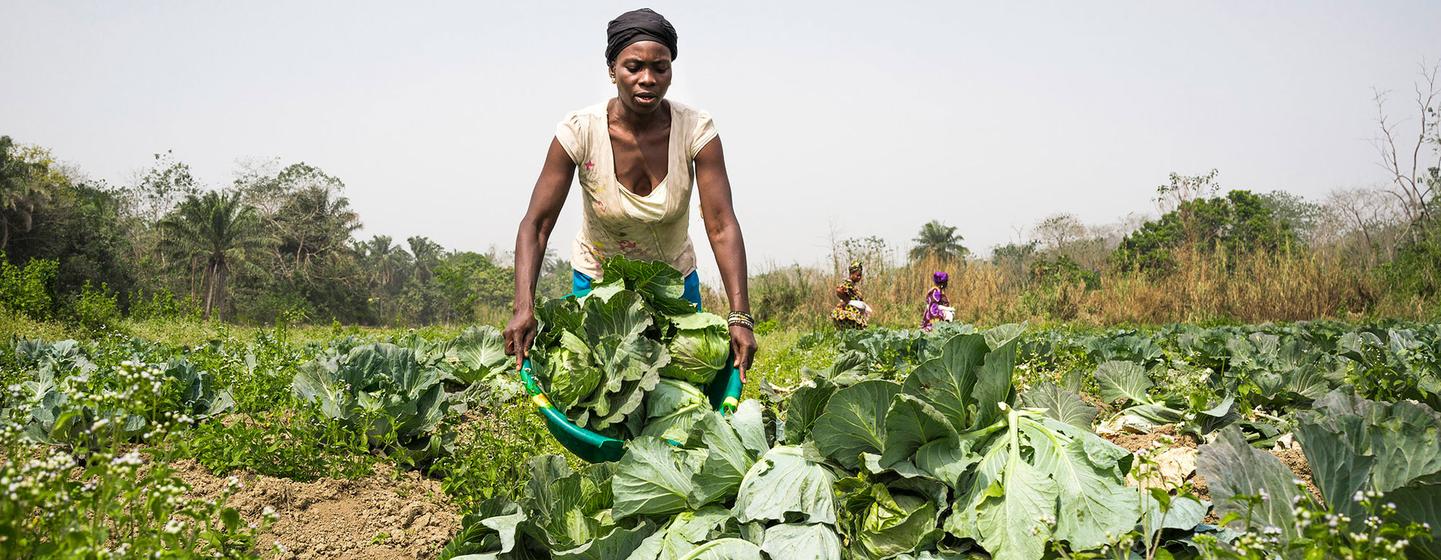
African governments must “urgently redouble efforts” to achieve gender equality in agrifood systems a crucial step towards improving nutrition, health, and women’s economic empowerment. This is the main recommendation of the report “Zero Inequalities: Innovative Policies for Inclusive and Gender-Sensitive Food Systems in Africa”, presented at the 12th Malabo Montpellier Forum.According to experts, accelerating progress on gender equality in agriculture and food systems could help reverse the recent upward trends in hunger and poverty.The Malabo Montpellier Panel notes that measures adopted by many African countries to promote gender equality remain “slow and fragile” and have been undermined by shocks such as the COVID-19 pandemic and conflicts. The report calls for agrifood systems designed to meet the needs of both women and men, in order to build more equitable, resilient, and healthier societies.According to the AFAWA initiative (Affirmative Finance Action for Women in Africa), women’s lack of access to finance could result in a $316 billion drop in Africa’s GDP by 2025. Persistent barriers — unequal access to land, credit, information, and decision-making continue to limit women’s contribution to transforming food systems.The report proposes a package of measures to strengthen women’s empowerment at all stages of the agrifood chain: research and innovation, extension services, production, post-harvest processing, distribution, trade, nutrition, consumption, and political leadership.Four countries Ethiopia, Ghana, Rwanda, and Togo are highlighted for their policy and institutional innovations promoting gender equality in the food sector.Dr. Ousmane Badiane, Chair of AKADEMIYA2063 and Co-Chair of the Panel, stressed: “Africa is making significant progress in girls’ education, women’s political representation, and female entrepreneurship. This report provides valuable lessons from countries that have recorded the most notable achievements.”The Panel points out that the gap in food security between men and women has widened eightfold since 2018. According to the FAO, closing the agricultural productivity gap could reduce global food insecurity by 45 million people and add $1 trillion to global GDP.Yet women account for only 25% of agronomists in Africa. In Mali, out of 302 agricultural extension agents, only one is a woman.Rwanda an example of female leadership stands out for its strong female representation in politics and governance. The country has a National Women’s Council that oversees the election of women’s committees from the village level to the national level, ensuring rural women’s participation in decision-making.For Professor Joachim von Braun, Co-Chair of the Panel, “Adapting food systems to women’s needs will be key to achieving major continental goals such as ending hunger, driving economic development, and building climate resilience.”Babacar Sene Journal Agropasteur(D’après le rapport du Panel Malabo Montpellier)