


As the Alliance for a Green Revolution in Africa (AGRA) marks twenty years of existence, the Alliance for Food Sovereignty in Africa (AFSA) is seeking to open a debate on the results of the model promoted since 2006.
During a webinar devoted to an assessment of two decades of the “Green Revolution,” academics, experts and civil society representatives presented new data and discussed alternatives based notably on agroecology and the diversification of food systems.
According to information presented during the webinar, hunger has reportedly increased significantly in several countries targeted by AGRA programmes, despite substantial international funding being allocated to transforming agricultural systems.
For AFSA, these findings call for a reassessment of the choices made over the past twenty years and raise questions about the relevance of a model heavily reliant on agricultural intensification and the use of chemical inputs.
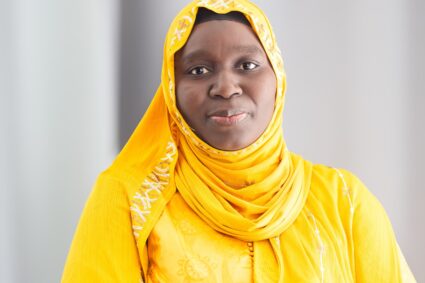
Speaking on behalf of AFSA for West Africa, Senegalese agroecology expert Famara Diédhiou presented the main lessons emerging from the Senegalese experience, which, he argued, has followed a different trajectory.
According to him, Senegal has, in several respects, stood apart from the conventional Green Revolution model by giving greater importance to crops that were long considered secondary.
This approach has enabled Senegal to maintain, and in some cases improve, certain levels of production and yields, while preserving a degree of agricultural diversity.
“Intensification based on high chemical-input use has never, by itself, fed populations,” Famara Diédhiou argued, stressing that the Senegalese experience offers important lessons for the debate on pathways to achieving food security.
The expert particularly noted that, unlike the trend observed in several AGRA member countries, Senegal has recorded a significant reduction in hunger. In his view, this development demonstrates that the model promoted by the Green Revolution “has never been the only way” to sustainably feed populations.
For AFSA, the issue is not to oppose investment in African agriculture, but rather to promote a different way of directing such investments, with greater emphasis on diversification and the central role of agroecology.
The report presented during the webinar therefore calls for increased funding for diversified and resilient agricultural systems adapted to local realities.
Among the proposals put forward are the diversification of agroecological systems, improving the biological fertility of soils, developing farmer-managed seed systems, diversifying production at farm level, and strengthening public agricultural extension services that place farmers themselves at the centre.According to AFSA, such an approach would also make it possible to better address the effects of climate change and strengthen the resilience of family farms.In Senegal, the Dynamics for an Agroecological Transition in Senegal (DYTAES) is presented as an example of broad-based mobilisation around the agroecological transition. It brings together various stakeholders committed to building more sustainable food systems better suited to the country’s realities.Famara Diédhiou nevertheless calls for vigilance regarding strategies that, in his view, could gradually reintroduce approaches inspired by the Green Revolution in new forms.He believes Senegal must safeguard its achievements and prevent external initiatives from weakening national agroecological transition efforts.“The evidence is there. It is time to fund what works”For AFSA, agroecology is no longer merely a demand put forward by civil society organisations.National strategies and policies incorporating this approach have been adopted in several African countries.
The challenge, therefore, is no longer to demonstrate that alternatives to the Green Revolution exist, but to provide them with the financial resources needed to scale up.
It is in this context that AFSA has published its report entitled “The Green Revolution Has Failed in Africa: Twenty Years Later.” The organisation is calling for a change of course towards agroecological and diversified food systems, drawing on experiences which, in its view, are already delivering results across the continent.
“The evidence is there. It is time to fund what works,” AFSA concludes, calling for agricultural diversification, food sovereignty and agroecology to be placed at the heart of agricultural investment policies in Africa.
Babaclimat – Journal Agropasteur