
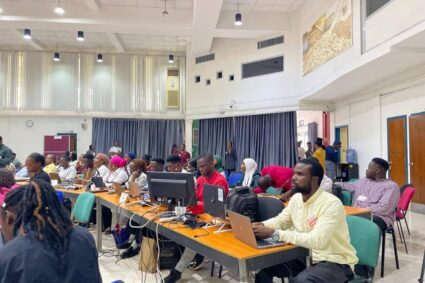
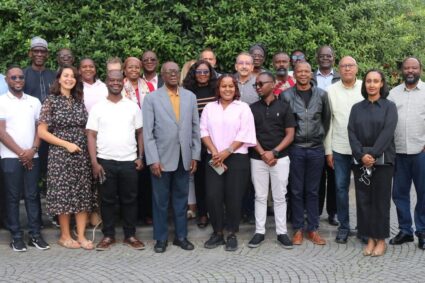



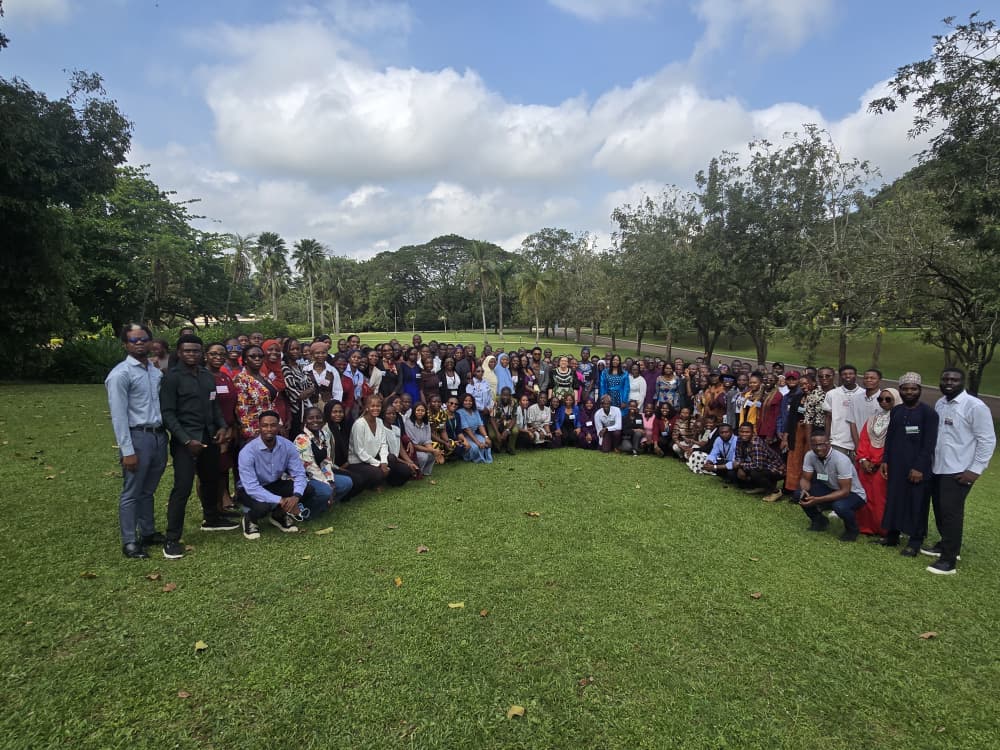
The International Association of Researchers and Scholars (IARSAF), which brings together young researchers and academics from the International Institute of Tropical Agriculture (IITA), is holding its 29th Annual Symposium from November 3 to 5, 2026.The scientific gathering aims to promote climate-smart and nutrition-sensitive agricultural innovations to strengthen the productivity and resilience of African agrifood systems.Held under the theme “Productive, Nutrient-Rich and Resilient Agrifood Systems: Scaling Up Climate-Smart and Nutrition-Sensitive Innovations,” this year’s symposium is taking place across several locations, including IITA headquarters in Ibadan, Nigeria, IITA Kenya, and the International Centre of Insect Physiology and Ecology (icipe) in Nairobi, Kenya.Over three days, researchers, scientists, academics and agricultural development professionals will exchange ideas on how research and innovation can drive the sustainable transformation of food systems across Africa.The programme includes scientific knowledge-sharing, mentoring, research collaboration and the promotion of innovations capable of improving production conditions and the nutritional quality of food.In the face of climate and nutrition challenges, research must accelerate solutionsThe symposium comes at a time when African agriculture is facing mounting pressures, including climate change, land degradation, food insecurity and malnutrition. In response to these challenges, the organisers emphasise the need to move beyond an approach focused exclusively on increasing agricultural production volumes.The challenge is now to promote agrifood systems that can produce more while improving the nutritional quality of food, preserving natural resources and strengthening farmers’ capacity to withstand environmental and economic shocks.The chosen theme therefore reflects a shift in the priorities guiding agricultural transformation in Africa.The aim is to reconcile three complementary objectives: increasing productivity, improving nutrition, and strengthening the resilience of farms and food systems in the face of climate change.In this context, scientific research is expected to play a decisive role in developing solutions tailored to local realities and the needs of farming communities.Leading experts mobilised around agricultural innovationThe 29th IARSAF Annual Symposium will bring together distinguished speakers from agricultural research, crop improvement, gender equality, youth development and climate change adaptation.The featured speakers include Professor Charles Oluwaseun Adetunji, Deputy Vice-Chancellor for Research at the Federal University of Agriculture and Development Studies, Iragbiji, in Osun State, Nigeria; Dr Ekemini Obok, an Associate Professor specialising in crop improvement at the University of Calabar; Dr Olubukola Precious Idowu, Coordinator of the Gender and Youth Development Programme at the Agricultural Media Resources and Extension Centre (AMREC) of the Federal University of Agriculture, Abeokuta; and Dr John Choptiany, a climate change adaptation and resilience specialist at IITA Kenya.Their contributions are expected to deepen discussions on the scientific, institutional and social dimensions of building resilient agrifood systems. They will also highlight opportunities to scale up innovations that address the agricultural challenges facing the continent.Beyond scientific exchanges, the symposium will give young researchers an opportunity to engage with experienced scientists and development professionals, compare findings and explore ways to turn research-based knowledge into practical solutions for farmers, rural communities and agricultural value chain stakeholders.Within IITA, IARSAF contributes to strengthening the scientific capacities of researchers and scholars, developing professional networks, and promoting their participation in agricultural research and development.Over the years, its annual symposium has become a platform for presenting emerging research, fostering interdisciplinary dialogue and building connections between young scientists, established researchers and development professionals.A new generation of scientific talent is emerging as a key driver of agricultural transformation.Building on the achievements of previous editionsThe 28th edition, held in October 2025, focused on climate resilience and nutritional transformation through science and a systems-based approach.Discussions highlighted the importance of mentoring, scientific communication, stronger value chains, agro-industry and making research findings accessible to the communities for whom they are intended.The previous edition also underscored the importance of collaboration and integrated approaches to addressing the interconnected challenges facing African food systems.Building on these discussions, the 2026 symposium seeks to explore further how research can be translated into action, examining how climate-smart agriculture and nutrition-sensitive innovations can contribute to broader development outcomes.For young researchers, the challenge goes beyond presenting their findings. It also involves understanding how their discoveries can influence public policy, agricultural practices and innovation strategies in support of the continent’s development.Towards more inclusive and resilient African agrifood systemsAcross Africa, the need to increase food production, improve nutritional quality and reduce agriculture’s vulnerability to climate change is becoming increasingly urgent.Meeting this challenge requires an integrated approach that brings together crop improvement, sustainable soil management, climate adaptation, biodiversity conservation, nutrition, women’s inclusion and youth participation.It also requires stronger partnerships among research institutions, universities, policymakers, development organisations, the private sector and farming communities.The objective is to ensure that promising innovations are accessible to farmers, financially affordable and deployed on a sufficiently large scale to generate lasting impact.Through its 29th Annual Symposium, IARSAF aims to contribute to discussions on the future of African agriculture by providing young researchers with a platform to exchange ideas on the continent’s major priorities.The gathering, taking place in Nigeria and Kenya, is also expected to reaffirm the importance of investing in the next generation of African scientists and strengthening research collaboration.This is a major challenge for Africa: building agrifood systems that are not only productive, but also nutritious, inclusive and resilient to climate-related and economic crises.By Babacar SèneAgropasteur Journal