

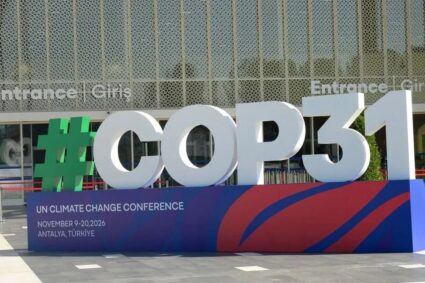

The accreditation of the Ghana Infrastructure Investment Fund (GIIF) by the Green Climate Fund (GCF) marks a strategic step forward in Ghana’s efforts to mobilize climate finance.Now recognized as a national Direct Access Entity, the Ghanaian fund has acquired a new capacity to seek and manage international resources aimed at developing infrastructure that is resilient to climate change.On the sidelines of COP31 in Antalya, Ghana intends to highlight this achievement and present the investment opportunities it creates for its economy.Ghana is taking an important step forward in its strategy for financing development and tackling climate change. The accreditation of its infrastructure investment fund, the Ghana Infrastructure Investment Fund (GIIF), as a national Direct Access Entity of the Green Climate Fund (GCF), represents a major institutional and financial milestone.Approved at the 46th meeting of the Green Climate Fund Board, this recognition enables GIIF to submit funding proposals directly and, subject to approval, mobilize international resources to support strategic climate-related investments.This development is far from insignificant. It strengthens Ghana’s ability to take ownership of the preparation, structuring and management of its climate projects, while reducing its dependence on international intermediaries to access Green Climate Fund resources.Until now, working through accredited international agencies has been one of the main channels for accessing Green Climate Fund financing.With GIIF’s accreditation, Ghana now has an additional national instrument through which it can present its own projects and engage directly with the financial mechanism of the United Nations Framework Convention on Climate Change.Direct Access: A Genuine Instrument of Financial SovereigntyThis new capacity could help simplify certain procedures, improve control over project preparation and management costs, and, above all, strengthen national ownership of climate investments.For a country facing substantial infrastructure needs alongside economic and budgetary constraints, this development represents a strategic lever.In particular, it offers the opportunity to seek financing tailored to national priorities, without systematically depending on multilateral institutions to mobilize resources.Resilient Infrastructure at the Heart of Investment PrioritiesThe challenge now is to turn this international recognition into concrete projects.Several strategic sectors are covered by GIIF’s investment prospects. These include the development of renewable energy and the decarbonization of the energy grid, the modernization of transport and urban mobility systems, as well as improvements in water management and sanitation.These investments are particularly important in a context where Ghana is increasingly exposed to the impacts of climate change, including droughts, floods and growing pressure on natural resources.In the northern regions, securing access to water and strengthening water infrastructure are among the major adaptation priorities.The objective, therefore, is to make climate finance a genuine instrument of economic transformation, capable of supporting infrastructure that simultaneously addresses development needs, climate adaptation and greenhouse gas emission reduction.Mobilizing Private Investors Through Blended FinanceAnother important dimension of this accreditation is its potential to mobilize private capital.Green Climate Fund resources can take various forms, including grants, concessional loans and other financial instruments tailored to specific projects. These resources can help reduce the risks associated with investments in green infrastructure.GIIF will be able to rely in particular on blended finance mechanisms, combining concessional climate resources with commercial capital.This approach aims to improve the financial viability of projects, build investor confidence and encourage greater participation from both domestic and international private-sector players.For Ghana, the objective is to move beyond an approach based solely on public financing and create an environment capable of attracting long-term investment in sustainable infrastructure.Climate Finance Also Addresses the Debt ChallengeThis strategy also offers significant economic benefits for the country.Following a period of severe economic turbulence and budgetary constraints, Ghana must find the resources needed to address its infrastructure deficit without excessively increasing its reliance on commercial borrowing.From this perspective, concessional climate finance and grants are particularly valuable instruments. They can help diversify funding sources and reduce systematic dependence on loans contracted at market rates.However, direct access to the Green Climate Fund does not mean that financing will automatically be granted, nor that all funding will be non-repayable. Each project must meet the Fund’s eligibility, viability and compliance requirements.Green Project Preparation Facility: Preparing the First Green InvestmentsBeyond accreditation, Ghana is also working to develop a portfolio of projects capable of attracting climate finance.It is in this context that the Green Project Preparation Facility (PPF) was established, as a mechanism dedicated to preparing green infrastructure projects.Developed with the support of the British High Commission and managed by FSD Africa, this facility has received initial funding of £5 million.Its mission is to support the development and preparation of projects, from technical and economic feasibility studies to financial structuring, in order to make them sufficiently robust and bankable to attract Green Climate Fund financing and private investment.This project preparation facility represents an essential link in the climate finance chain.Having direct access to international resources is not enough. Projects must also be technically credible, economically viable and compliant with the environmental and social standards required by financing institutions.Antalya: A Showcase for Ghana’s Climate AmbitionsIt is against this backdrop that Ghana intends to showcase its experience at COP31 in Antalya, Türkiye.Through an official side event organized by the HATOF Foundation and the Ghana Infrastructure Investment Fund, the country is hosting a high-level dialogue under the theme: “From Climate Ambition to Investment: Building Africa’s Climate-Resilient Infrastructure Pipeline.”The meeting is expected to provide an opportunity to discuss the conditions needed to translate climate commitments into operational investments, while highlighting national mechanisms for accessing international financing.GIIF’s accreditation and the launch of the Green Project Preparation Facility are expected to be central topics of discussion, particularly regarding the ability of African institutions to develop their own project portfolios and mobilize capital on a large scale.Beyond Ghana’s experience, this development raises a fundamental question for the African continent: how can Africa move away from dependence on external financing towards building its own institutional capacity to mobilize, manage and direct climate resources?In Antalya, Ghana intends to offer an initial answer. Its ambition is clear: to make direct access to climate finance an instrument of economic sovereignty, infrastructure transformation and community resilience.This message resonates strongly within international climate negotiations: Africa is not simply calling for funding to address climate change. It also wants the institutions, expertise and financial instruments needed to mobilize and manage these resources effectively.Babaclimat – Journal Agropasteur