

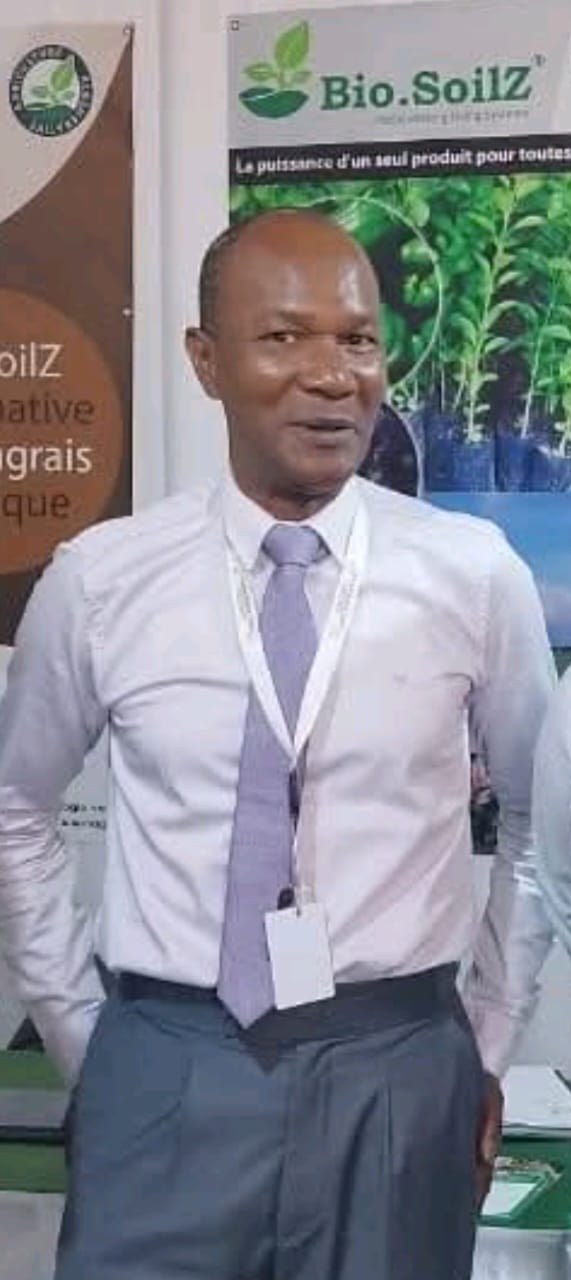
Faced with the progressive degradation of agricultural land, declining crop yields, and the health and ecological impacts associated with the prolonged use of chemical fertilizers, Senegal is exploring new agroecological solutions. During the Senegal Agroecology Days (JAES 2026), Bio.SoilZ Senegal presented an innovative response focused on soil microbiology and sustainable organic fertilization.
For several decades, Senegalese agriculture has been confronted with a significant decline in soil fertility, a direct consequence of the intensive use of chemical inputs. This situation has led to structural land degradation, reduced agricultural productivity, and growing health and environmental concerns.
In this context, the search for sustainable alternatives has become a national priority. The production of organic fertilizers and biological soil amendments is now emerging as a credible solution to restore soil health while ensuring healthier, more productive, and environmentally friendly agriculture.
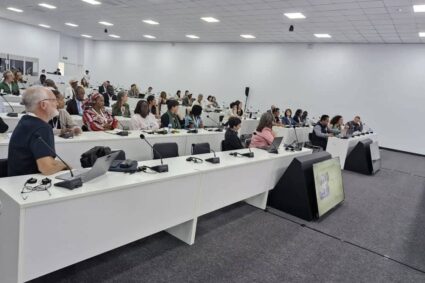
On the second day of JAES 2026, as part of the Knowledge Forum and the conference on Sustainable Intensification, several sessions highlighted the challenges related to land restoration, including science and indigenous knowledge for sustainable food systems; the Ndem model and integrated endogenous development; understanding soils for better cultivation; agronomic restoration of saline lands in Sine-Saloum and Casamance; and soil health and agroecology in West Africa.
All these reflections converge toward the same urgent objective: sustainably restoring Senegal’s agricultural lands and reducing dependence on chemical inputs.
Among the solutions discussed, Bio.SoilZ Senegal presented soil microbiology as a key driver of regeneration. Represented by Mr. Abdoul Wone, the initiative stood out for its innovative biological soil regeneration approach.
According to him, Bio.SoilZ offers a 100% natural alternative capable not only of restoring soil fertility but also of reactivating soil microorganisms, stimulating root development, strengthening the natural resilience of crops, and sustainably optimizing agricultural yields. It is designed for regenerative agriculture that serves both nature and farmers.
“Bio.SoilZ is revolutionizing agriculture through soil microbiology. It is an innovative natural solution that regenerates land, improves soil health, promotes sustainable agricultural production, restores soil fertility, and supports farmers toward sustainable and high-performing production,” explained Mr. Wone.
In a country characterized by great pedological diversity—from the sandy soils of the north to the richer lands of the south—preserving soil quality represents a strategic challenge for food security.
The conclusions of the Knowledge Forum marked a major step toward the institutionalization of agroecology in Senegal under the theme: “From Vision to Action: Institutionalizing Agroecology for Sustainable Food Systems.”
Participants emphasized the importance of valuing farmers’ knowledge, integrating local initiatives, strengthening dialogue among researchers, producers, civil society organizations, and policymakers, as well as territorializing agroecological practices.
For Bio.SoilZ Senegal, this momentum confirms that agricultural sustainability can only be ensured through ecological approaches based on soil health, resilient farming systems, and reduced dependence on chemical inputs.
This signals the beginning of a new agricultural era. In the context of climate change, increasing pressure on natural resources, and the pursuit of food sovereignty, Bio.SoilZ Senegal positions itself as a strategic solution to support the transition toward regenerative agriculture. Soil restoration is no longer an option but a necessity for Senegal’s agricultural future.
Babacar Séne Journal Agropasteur