
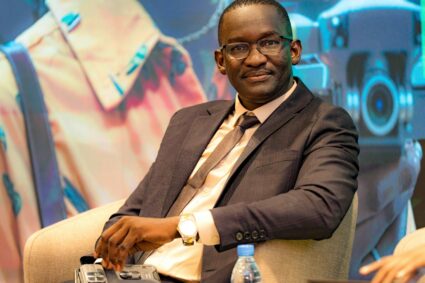
Traditional medicine has an enormous contribution to make to public health, but policies and administrative frameworks are still lacking,” said Dr. Erick Gbodossou, President of the NGO PROMETRA International, on the occasion of the 24th edition of African Traditional Medicine Day, celebrated on August 31, 2026, under the theme: “Reflecting on Research and Development Efforts in Traditional Medicine for the Implementation of Universal Health Coverage in the African Region.”The President of PROMETRA International, Dr. Erick Gbodossou, addressed a message to African peoples and called on policymakers to reconsider the place of traditional medicine within the continent’s health systems.In his message, Dr. Gbodossou addressed government authorities, parliamentarians, political and administrative officials, as well as traditional healers, Sanoussi, Kpohintos, Bokonon and Vodounon, together with religious leaders, custodians of ancestral traditions and practitioners of ancient knowledge whose contributions could help advance health in Africa.For the President of PROMETRA International, this reflection must be placed within a historical perspective. He recalled that the International Conference on Primary Health Care, held from September 6 to 12, 1978, in Alma-Ata, in present-day Kazakhstan, under the auspices of the World Health Organization (WHO) and UNICEF, resulted in the landmark Alma-Ata Declaration.The conference, which brought together more than 3,000 delegates from 134 countries, recognized health as a fundamental human right and placed primary health care at the heart of the goal of “Health for All.”But nearly half a century later, Dr. Gbodossou questions the reality of this recognition in African countries.“In our countries in the African Region, is health truly regarded as a human right when we sometimes have only one doctor for every 100,000 inhabitants and one nurse for more than 10,000 inhabitants?” he asks.He also points to the continuing burden of maternal, child and neonatal mortality, as well as malnutrition, all of which continue to weaken African health systems.Faced with these challenges, he recalled that in July 2001, in Lusaka, Zambia, African Heads of State adopted a historic decision proclaiming 2001–2010 the “Decade of African Traditional Medicine,” with the support of WHO, particularly its African Region.Research and results, but still insufficiently valuedAccording to Dr. Erick Gbodossou, the past decades have nevertheless not been in vain. He acknowledges that extensive research and development work on traditional medicine has been carried out in several African countries and across a wide range of health fields.Some of the results obtained, he says, have even been protected through various intellectual property institutions, including the World Intellectual Property Organization (WIPO) and the African Intellectual Property Organization (OAPI), as well as through national institutions in several countries.The main obstacle now lies, he argues, in the absence in several countries of legal and regulatory frameworks capable of transforming research findings into products that are accessible to populations.“Without legislation, the results obtained cannot be developed and brought to value,” laments the President of PROMETRA International, calling for a transition from research to the production, distribution and use of solutions derived from African medical knowledge.Dr. Gbodossou also highlights what he considers a major paradox: while some major diseases continue to devastate the continent, research into solutions derived from African traditional medicine remains insufficiently explored and utilized.He cites HIV/AIDS and Ebola in particular, arguing that research and solutions emerging from African scientific work deserve to be further studied, evaluated and, where they meet scientific and regulatory requirements, developed for the benefit of populations.For the President of PROMETRA International, traditional medicine has enormous potential in the field of public health. However, he believes that public policies and administrations must create the necessary conditions for its development.WHO also estimates that a very large majority of the population in sub-Saharan Africa relies on traditional medicine.For Dr. Gbodossou, this reality should encourage States to better organize and regulate the sector rather than keeping it on the margins of the health system.“How many countries have actually legalized their traditional medicine?” asks the President of PROMETRA International, raising a series of questions for African policymakers: How many countries currently have effective legislation on traditional medicine? How many have adopted the necessary implementing regulations? And what place does traditional medicine occupy in national health budgets?These questions also have economic and cultural implications. Dr. Gbodossou warns of the risk that foreign researchers and operators may come to African villages to collect knowledge and expertise held by traditional healers, before transforming them into commercially marketed products.He warns against the possibility that one day, “white people will come back to sell us products derived from knowledge they acquired from our traditional healers and teach our children what their grandparents used to do.”On the occasion of the 24th African Traditional Medicine Day, PROMETRA International is therefore renewing its call for the legalization and institutional recognition of traditional medicine in African countries.Dr. Gbodossou is particularly advocating for a better-structured health system, with specific administrative frameworks capable of taking into account the two major therapeutic approaches.According to him, conventional medicine and traditional medicine are based on approaches, rationales, forms of reasoning and conceptions of health that are not always identical, but which could be better organized within a framework of complementarity and public health.He also calls for broader research perspectives. In his view, the Cartesian model on which conventional medicine is largely based cannot, on its own, capture all dimensions of the human being, particularly love, intuition and emotion, which he considers important components of human experience.Among the other challenges highlighted by PROMETRA International is the organization of traditional healers into associations, enabling them to practice within a formal framework, with rights but also obligations and responsibilities toward the community.The organization also advocates for collaborative research between traditional knowledge holders and researchers, the development and dissemination of research findings, the identification of African solutions adapted to local health problems and major pandemics, and the protection of traditional knowledge holders against abusive appropriation.PROMETRA also encourages traditional healers to pass on their knowledge to younger generations, particularly through the training of students, in order to ensure the continuity of this knowledge and of Africa’s medical and cultural heritage.A call for the transmission and protection of African valuesIn concluding his message, Dr. Erick Gbodossou directly addresses traditional healers and other custodians of values and knowledge inherited from African civilizations.He calls on them to preserve, transmit and promote this heritage, while urging African States to create the legal, scientific and institutional conditions necessary for its recognition.The President of PROMETRA International concludes his message with an invocation for the protection of the spirits of the ancestors and the hope that the path of African peoples will be illuminated by universal spirituality.Babacar SeneAgropasteur Journal – ReJOMETRA-SN