

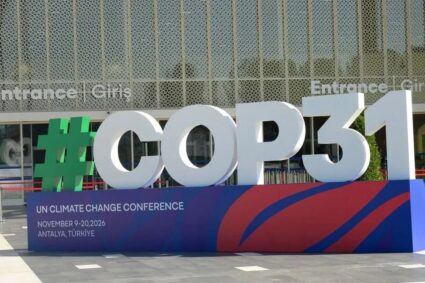
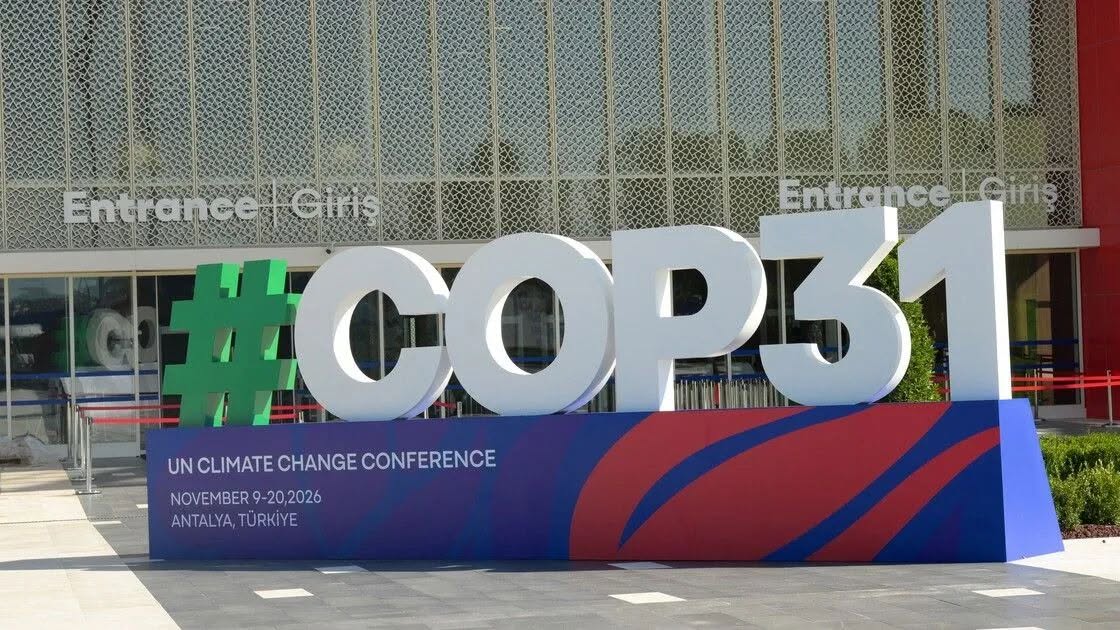
In Antalya, Türkiye, preparations for the 31st Conference of the Parties to the United Nations Framework Convention on Climate Change (COP31) are already setting the stage for a major global climate event.With modern infrastructure, carefully designed spaces, strengthened logistical and healthcare arrangements, and the expected participation of high-level dignitaries, the host country is demonstrating its ambitions.These preparations are raising hopes that climate commitments will finally be translated into concrete, measurable and sustainable action.Babaclimat takes you to the heart of Antalya, where preparations for this major international gathering reveal an impressive level of mobilization, particularly around its two main operational areas: the Blue Zone and the Green Zone.Everything appears to have been carefully planned to welcome thousands of delegates, heads of state, ministers, representatives of international organizations, NGOs, businesses, researchers, young people and visitors from all corners of the world under the best possible conditions.From 9 to 20 November 2026, Antalya will become the world capital of climate negotiations. Türkiye, as host country and President of this 31st Conference of the Parties, intends to give a new dimension to this international gathering, guided by dialogue, consensus and, above all, action.Since the first Conference of the Parties, held in Berlin in 1995, COPs have served as crucial moments to assess progress in the fight against climate change, strengthen international cooperation and negotiate collective responses to the climate emergency.However, over the years, one fundamental question has remained: how can political commitments be translated into concrete achievements on the ground?This is precisely the concern around which COP31 intends to build its identity.Presented as the « COP of the Future » and, above all, the « COP of Implementation », it aims to move beyond declarations of intent and accelerate the effective implementation of climate decisions.This approach rests on three fundamental pillars: dialogue, consensus and action.It is a strategy designed to restore trust between countries, strengthen partnerships and promote shared responsibility in the face of climate disruption.For the most vulnerable countries, particularly in Africa, the stakes are considerable: securing concrete responses to adaptation needs, accessible climate finance, technology transfers and support commensurate with the scale of the challenges.Blue Zone and Green Zone: Two strategic spaces at the heart of COP31One of the most remarkable aspects of the preparations in Antalya lies in the organization of the infrastructure and the distribution of activities across two major areas: the Blue Zone and the Green Zone.The Blue Zone will serve as the central hub for official negotiations. It will host government delegations, high-level meetings, diplomatic engagements and proceedings conducted under the United Nations Framework Convention on Climate Change. Access will be restricted to accredited participants, in accordance with United Nations regulations.It will also host side events addressing key issues, including climate change adaptation, clean energy, climate finance, zero waste, sustainable cities, technology, health and the green transition.The Green Zone, meanwhile, will be open to broader public participation. It is designed as a genuine platform for dialogue, awareness-raising, experience-sharing and showcasing climate initiatives.Public institutions, businesses, academics, civil society organizations and youth movements will be able to present their innovations, technological solutions and best practices. Exhibitions, concerts, workshops, panel discussions and interactive spaces will form part of the programme.This approach reflects the determination to make COP31 not merely a diplomatic conference, but also a popular, inclusive event open to all segments of society.International participation expected to match the scale of the ambitionsAccording to statements made on 31 October by Türkiye’s Minister of Environment, Urbanization and Climate Change, Murat Kurum, COP31 is expected to welcome 91 heads of state, nearly 300 ministers and approximately 1.5 million visitors.This expected level of participation demonstrates the importance attached to the gathering and Türkiye’s determination to make it a major event in international climate diplomacy.The Green Zone will be one of the summit’s main attractions. It will feature a 5,000-seat congress centre and amphitheatres capable of accommodating approximately 6,000 people. Concerts, conferences, debates and public meetings are also planned.Impressive infrastructure reflecting meticulous preparationThe scale of the facilities developed in Antalya deserves particular attention.The total area allocated to the two zones reflects the significant resources mobilized for the event.The Blue Zone covers 527,414 square metres. It includes plenary halls, offices for delegations, pavilions, a press centre and catering facilities.The Green Zone covers 582,244 square metres. It will host the Türkiye Pavilion, a science centre and several thematic areas dedicated to green industrialization, resilient cities, energy, transport, culture and civilization.Specific spaces, known as COPArt and the Start-up Zone, will also provide visibility for creative initiatives and innovative solutions.Together, these facilities demonstrate a clear ambition to make COP31 a platform for meetings, innovation and the showcasing of climate solutions.Zero waste: An environmental ambition translated into concrete facilitiesThe environmental dimension of COP31 will not be limited to speeches. It will also be reflected in the facilities planned across the site.As part of the international Zero Waste movement, several dedicated facilities have been developed: a Zero Waste hub, a demonstration and practical workshop centre, a kitchen called « Seven Regions, Seven Homes », a museum, as well as a temporary waste storage and composting centre.In the Blue Zone, a five-petal structure known as the « Time Tunnel », covering 10,000 square metres, will also serve as a Zero Waste museum.Three villages are also being highlighted as models of this environmental approach: Solak, in Aksu district; Demirciler, in Manavgat district; and Ormana, in İbradı district.Through these initiatives, Türkiye intends to give particular visibility to waste reduction practices, resource recovery and the promotion of more sustainable lifestyles.A strengthened security, healthcare and logistical systemThe success of an international conference of this scale also depends on the ability to ensure participants’ safety, mobility and access to healthcare.In this regard, the preparations in Antalya also demonstrate an ambitious organizational approach.A crisis management centre has been established in the Green Zone under the coordination of the Governor’s Office. It brings together police and health services, the Disaster and Emergency Management Authority (AFAD), fire services, Antalya’s Water and Wastewater Administration (ASAT), Aksu Municipality, as well as the operators AKEDAŞ and ENERYA.The mobility arrangements include a VIP car park with 1,500 spaces, an outdoor car park with 5,000 spaces, a parking area for 400 coaches and a helipad.To facilitate transportation, 630 low-emission buses, provided by 25 municipalities, will be deployed.This measure is part of the effort to reduce the event’s environmental footprint.On the healthcare front, five medical posts will be operational: three in the Blue Zone and two in the Green Zone.The arrangements will also include seven operational ambulances and two standby ambulances.In addition, 20 mobile teams from the National Medical Rescue Team (UMKE) will be deployed, including nine in the Blue Zone and eleven in the Green Zone.Finally, two separate crisis management centres, coordinated by AFAD, will strengthen response and intervention capacity in the event of a disaster or emergency.Antalya: Exceptional preparations raise hopes for a different kind of COPBeyond the figures, infrastructure and logistical resources mobilized, the organization of COP31 in Antalya is already sending a strong signal: that of a country that appears to have fully understood the requirements involved in hosting a global climate event.The quality of the facilities, the diversity of the spaces, the anticipation of delegations’ needs, the attention paid to healthcare and security requirements, as well as the importance given to public participation, are all elements worthy of recognition.However, these remarkable logistical preparations also raise a major expectation: ensuring that organizational excellence is matched by the outcomes of the negotiations.The true success of COP31 will not be measured solely by the number of participants, the quality of the infrastructure or the success of the side events. Above all, it will be judged by the ability of states to take ambitious decisions, mobilize the necessary funding and initiate concrete action on the ground.For Africa, which is particularly exposed to droughts, floods, desertification, coastal erosion and biodiversity loss, expectations are immense.The main priorities include adaptation, climate finance, community resilience and climate justice.Antalya is therefore presenting a COP that is being prepared with ambition, method and remarkable organizational capacity.Hope is now within reach: the hope that COP31 will not simply become another conference in the history of climate negotiations, but genuinely a COP of Action, Shared Responsibility and Implementation.Babaclimat will closely follow this major international gathering, focusing on its key challenges, decisions and commitments, with particular attention to the expectations of Africa and communities most vulnerable to climate change.Babaclimat/journal Agropasteur