
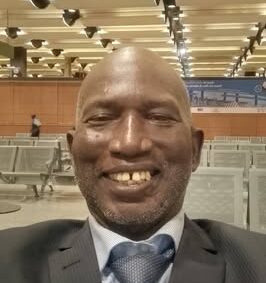
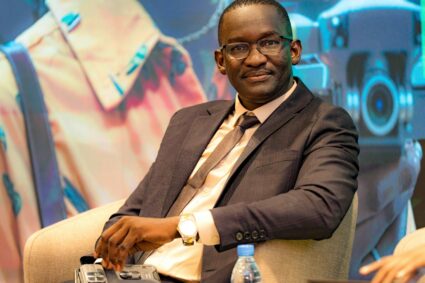

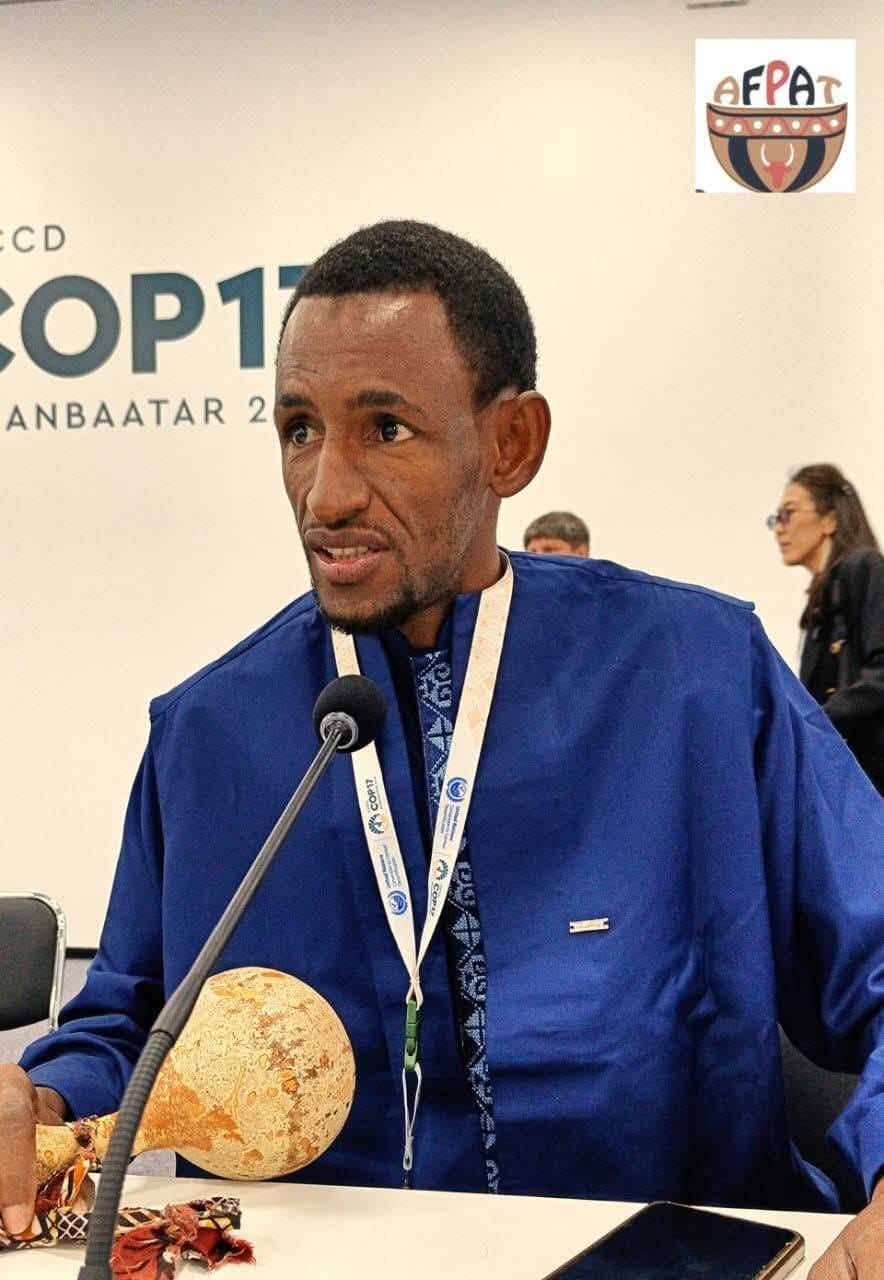
At the 17th Conference of the Parties to the United Nations Convention to Combat Desertification (UNCCD COP17), held in Ulaanbaatar, Mongolia, Nassirou Sow, Coordinator of the Organization for the Defense and Promotion of Pastoralism (ODPP – Laapol Aynaabe), raised the concerns of Senegal’s nomadic pastoralist herders.At the heart of his advocacy were the protection and security of grazing areas and transhumance corridors, pastoral mobility, access to water, and the preservation of traditional knowledge.From August 12 to 24, 2026, at the invitation of Ms. Hindou Oumarou Ibrahim, President of the Association for Indigenous Peulh Women of Chad (AFPAT), and Dr. Olé of the Impact Kenya organization, His Highness Nassirou Sow took part in the proceedings of UNCCD COP17.Pastoralism featured prominently in the discussions at this international conference devoted to combating desertification and restoring degraded land.Over the course of the two-week conference, the Coordinator of ODPP – Laapol Aynaabe participated in several high-level panels devoted to pastoralism, indigenous peoples, and the preservation of the knowledge and practices of herding communities.In his interventions, Nassirou Sow placed particular emphasis on Senegal’s experience and on the challenges facing pastoral communities, especially the protection and security of grazing areas and transhumance corridors.He advocates an approach based on the restoration, protection and recognition of pastoral lands, which he considers an essential heritage for pastoral mobility and for strengthening the resilience of territories in the face of climate change.According to the ODPP Coordinator, pastoral corridors should be recognized as genuine pastoral infrastructure, on the same footing as other infrastructure needed for territorial development.Their protection, he argues, is essential to ensuring the mobility of pastoralists in Senegal, as well as across borders.Another major issue raised in Ulaanbaatar was the effective participation of nomadic pastoralist herders in decision-making processes that directly affect their activities and territories.Nassirou Sow stressed the need to involve pastoral communities more closely in the development and implementation of public policies that concern them.He also called for the preservation and promotion of the traditional knowledge of indigenous herders, which is the result of long experience in natural resource management and adaptation to often difficult climatic conditions.Access to water was also a priority in his advocacy. In this regard, the ODPP Coordinator called for better planning of pastoral areas and the development of grazing management plans that would ensure the sustainable use of natural resources while promoting the regeneration of degraded land.In his view, this approach should make it possible to better reconcile pastoral mobility, sustainable resource management and land restoration in areas affected by degradation and the impacts of climate change.The social dimension was not overlooked in his intervention. Nassirou Sow particularly stressed the need to establish education systems adapted to the realities of children from nomadic pastoralist families.For him, public policies must take into account the mobility of pastoral communities in order to guarantee children effective and continuous access to education, without undermining their families’ way of life and economic activities.“Nomadic pastoralist herders are not a problem”This was one of the strong messages delivered by Nassirou Sow at COP17. “They are an adapted and alternative solution to the consequences of climate change,” he emphasized.In his view, pastoralism should therefore not be seen as a constraint, but as a component of the response to environmental challenges.In the face of climate disruptions, pastoral mobility enables communities to adapt their activities to the availability of natural resources in environments that are often difficult.Having pastoralism recognized in land restoration policies is one of Nassirou Sow’s key challenges. For him, UNCCD COP17 provided a major platform for sharing experiences, knowledge and practices related to pastoralism.The Ulaanbaatar conference brought together pastoralist herders, representatives of indigenous peoples, experts and various stakeholders committed to combating desertification and restoring land, from several regions of the world.Through its participation, ODPP – Laapol Aynaabe seeks to contribute to strengthening recognition of pastoralism as an essential component of land restoration, climate change adaptation and sustainable development policies, in Senegal and across Africa.Babaclimat – Agropasteur Journal