
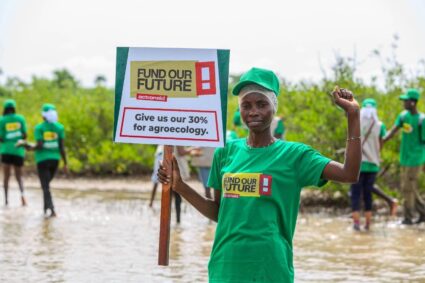
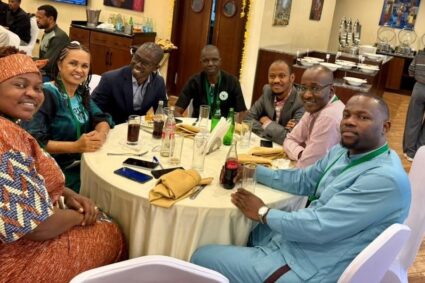



As the African Food Systems Forum opens in Dakar, farmers and civil society actors are sounding the alarm. Controlling seeds, they argue, is a matter of survival and independence for family farming, which feeds two-thirds of Africans.
Dakar has become the stage for a decisive debate: who should control seeds in Africa? For Amadou Kanouté, Executive Director of the Pan-African Institute for Citizenship, Consumers and Development (CICODEV), the answer is clear: “If we in Africa do not manage to control and master our seeds, it is a matter of survival. We will end up depending on other institutions, on other people, just to access the very basis of life — the seed.”
The numbers confirm the stakes. In Africa, 95% of farmland is cultivated by family farmers. These farms, often precarious but resilient, feed two-thirds of the population and employ the vast majority of the continent’s workforce. “Behind every plate of food lies a small producer, a family struggling to grow maize, millet, rice, cassava, or vegetables,” Kanouté reminds us.
These men and women form the true foundation of Africa’s food sovereignty. Yet their rights over seeds — to save, exchange, and reuse them — are increasingly threatened by policies and markets that favor industrial seeds at the expense of local varieties better adapted to the realities on the ground.
Beyond seeds, the sustainability of the entire African agricultural system is at stake. “Where will we get our fertilizers to enrich our soils? What will be the impact of certain inputs on our lands, and which political choices will be made?” asks the CICODEV director.
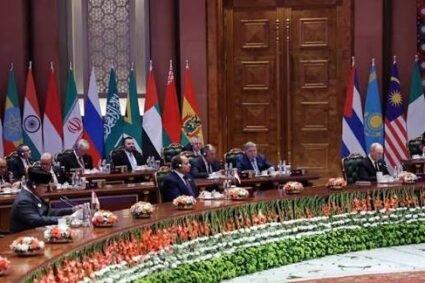
The Dakar Forum is presented as a space to chart the major directions of the continent’s food systems. But without farmers’ voices, there is a real risk that decisions will be taken far away from those who cultivate the land and feed the people.
Today, Africa must choose: continue to depend on external sources to feed its children, or build food sovereignty rooted in its seeds, its knowledge, and its own strengths.
The message is clear: to secure a future for the continent, we must listen to those who hold the hoe, sow the millet, and harvest the cassava — African farmers.Babacar Sene Journal Agropasteur