


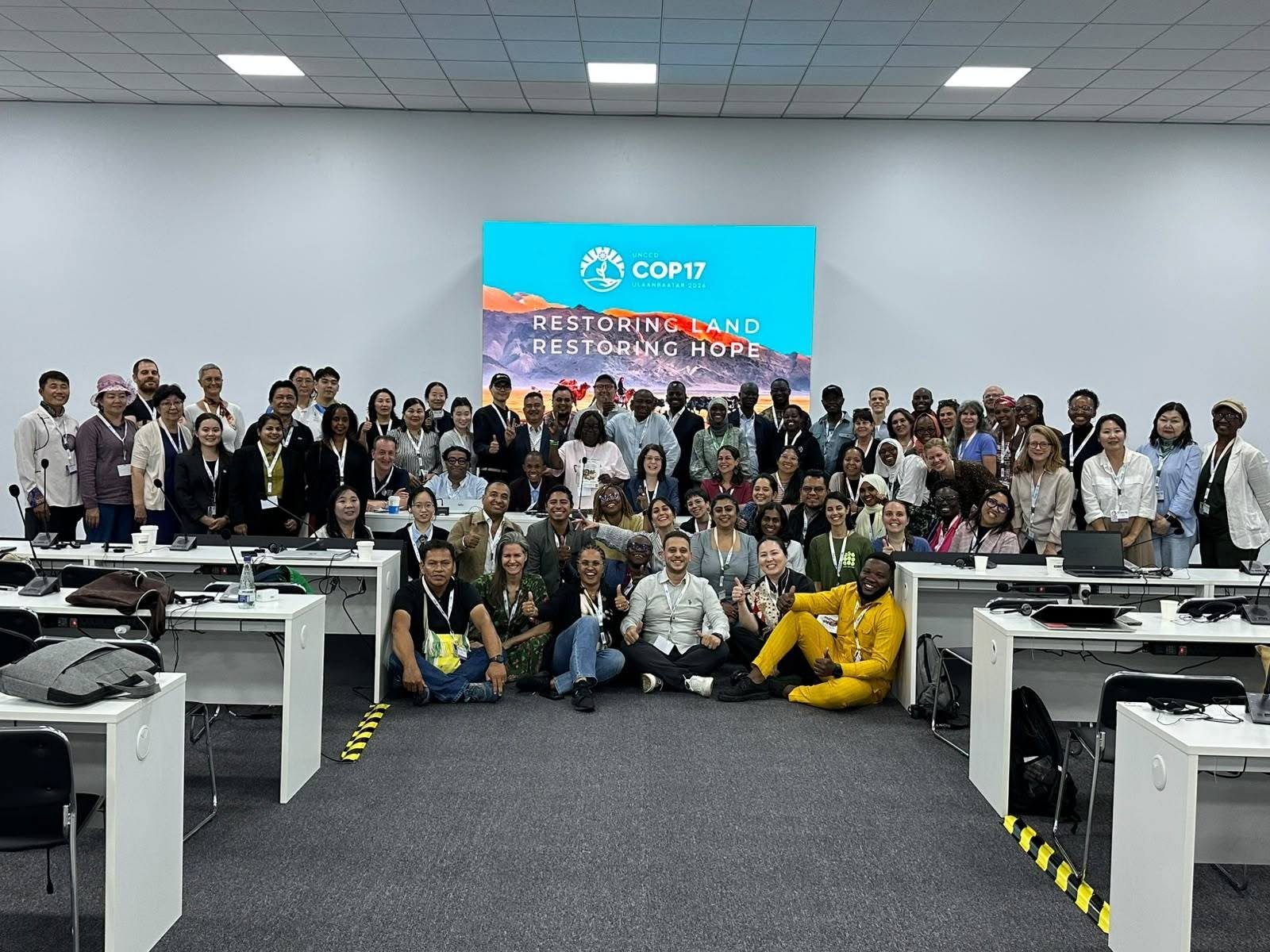
On the eve of the 17th session of the Conference of the Parties to the United Nations Convention to Combat Desertification (COP17), accredited civil society organizations (CSOs) from different regions of the world gathered in Ulaanbaatar to strengthen coordination and sharpen their strategies for participation in the conference proceedings.This mobilization follows the Civil Society Pre-COP, which brought together civil society organizations from the five regions of the world. The preparatory meeting provided an important platform for dialogue, experience-sharing and alignment on the key issues to be addressed at COP17.The objective was, in particular, to enable CSOs to better coordinate their actions, identify strategies to be implemented and strengthen their capacity to speak, beyond their regional specificities, with a common civil society voice on issues related to desertification, land degradation and drought.Building on this momentum, the Chair of the African CSO Panel of the UNCCD, Ms. Ellen Otaru-Okoedion, welcomed and engaged with representatives of civil society organizations present in Mongolia.The exchanges included several meetings with civil society groups and networks, notably the Women’s Caucus, representatives of Indigenous Peoples, and several delegations that expressed their desire to meet with the Chair of the African CSO Panel.These reunions also provided an opportunity for organizations present to commend her commitment, leadership and the rigor with which she carries out her mission of representing and coordinating African civil society.Welcoming the strong mobilization of CSOs on the occasion of COP17, Ms. Ellen Otaru-Okoedion reaffirmed her commitment to ensuring better information-sharing among organizations.“We will do our best to keep you informed about what is happening here. I humbly ask civil society organizations present in Mongolia to be more active and inclusive. Please do not hesitate to share interesting information and stories here, so that we can all learn and make full use of the opportunities offered by COP17,” she said.She also welcomed the arrival of several organizations already in Mongolia and encouraged exchanges among the various civil society stakeholders, with a view to making COP17 a space for learning, dialogue and influence.. Members of UIC Foundation Nigeria, in particular, extended their warm congratulations to the Chair of the African CSO Panel and welcomed her to Mongolia.For these organizations, the strong presence of African civil society at COP17 represents an opportunity to strengthen the continent’s voice in international discussions on sustainable land management, combating desertification and building community resilience.The same sentiment was expressed by the Ummaty International Charity Foundation (UIC) of Nigeria. Its National President, Haruna Muhammad Abubakar, praised Ms. Ellen Otaru-Okoedion’s leadership and wished her a productive stay, as well as “fruitful and impactful” outcomes at the end of the conferenceThe voices of women were also heard through messages of congratulations addressed to Ms. Ellen Otaru-Okoedion for her dedication to the cause of African CSOs. Women and men representatives present reaffirmed their commitment to actively contributing to the work of COP17.Beyond these expressions of recognition, these meetings represent above all a strategic moment for civil society. They enable organizations to compare their analyses, gain a better understanding of the conference’s challenges and define the priorities to be defended over the coming days.As decisions are expected to be taken in Ulaanbaatar, these civil society reunions are emerging as a genuine compass for action and orientation.They have helped strengthen ties among CSOs from different regions, consolidate African mobilization and identify common pathways towards more effective participation in the negotiations.The ambition is now clear: to ensure that an organized, inclusive and proactive civil society is heard, with the capacity to convey the concerns of communities directly affected by desertification, land degradation and drought.For African CSOs, the appointment is therefore set: to turn the mobilization of these first days into concrete results and impactful commitments by the end of COP17 on 28 August.
Babaclimat – Journal Agropasteur