
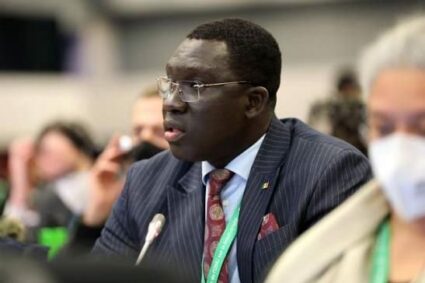
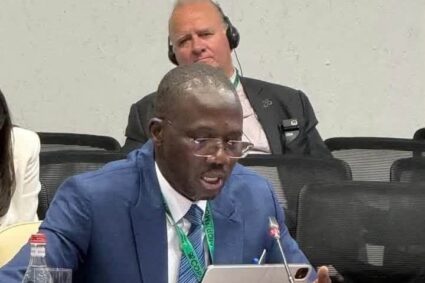
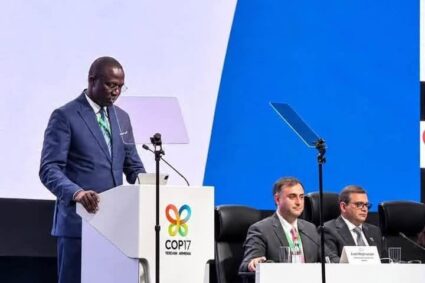


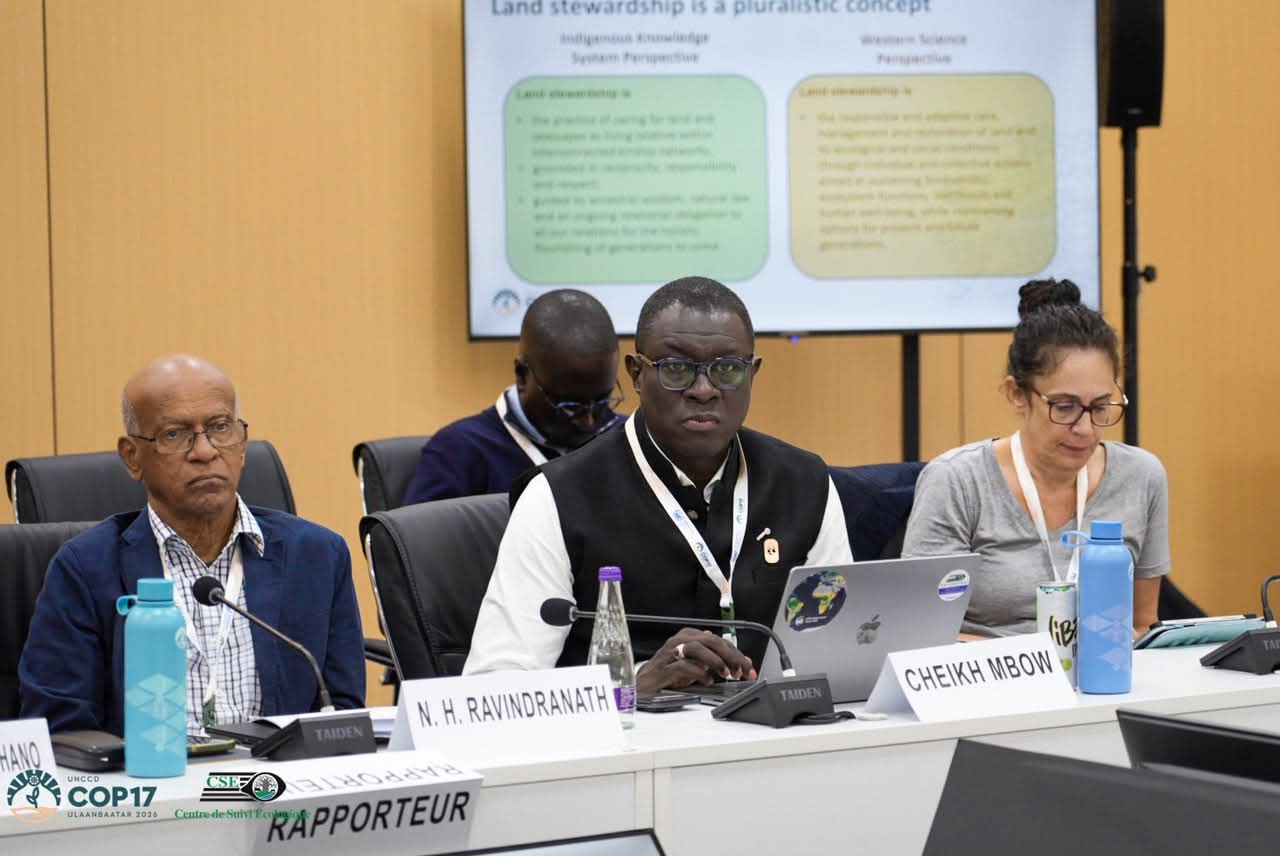
The second day of the 17th session of the Conference of the Parties to the United Nations Convention to Combat Desertification (UNCCD COP17) is focusing on several major issues: implementation of the Convention, financing efforts to combat land degradation and drought, and the role of science in policymaking.Following the opening of the proceedings, the Parties are focusing in particular on ways to accelerate action on land restoration, strengthen drought adaptation, and mobilize the resources needed to implement international commitments.Professor Cheikh Mbow, recently elected Chair of the UNCCD Science-Policy Interface (SPI), is fully engaged in the work of COP17.Immediately after his election, the SPI Chair took part in the proceedings of the Committee on Science and Technology (CST).Discussions are focusing in particular on drought planning and adaptation, knowledge sharing, innovation, and strengthening the links between scientific evidence and decision-making.The Science-Policy Interface therefore occupies a strategic position in the discussions, as countries face increasingly severe drought impacts, land degradation, and the consequences of climate change.Meanwhile, the Committee for the Review of the Implementation of the Convention (CRIC) is continuing its work on the progress made by States in implementing the Convention.The discussions are expected to examine, in particular, how countries are strengthening their capacities, implementing their commitments, and mobilizing the financing needed to combat land degradation and drought.The issue of financing remains crucial for the most vulnerable countries, particularly those facing intense pressure on their natural resources and increasingly frequent drought episodes.The second day of COP17 is therefore proving particularly busy, with the involvement of several Convention bodies, notably the CRIC, the CST and the Science-Policy Interface (SPI).In Ulaanbaatar, the discussions are highlighting the need to bring science, financing and action closer together in order to accelerate land restoration, strengthen community resilience, and better anticipate drought-related risks.For Professor Cheikh Mbow, COP17 also represents an important step towards strengthening the role of science in informing political decisions and action against desertification and land degradation.Babaclimat – Agropasteur Journal