
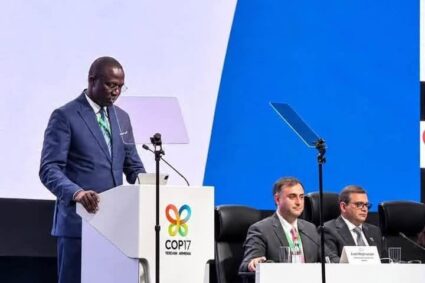

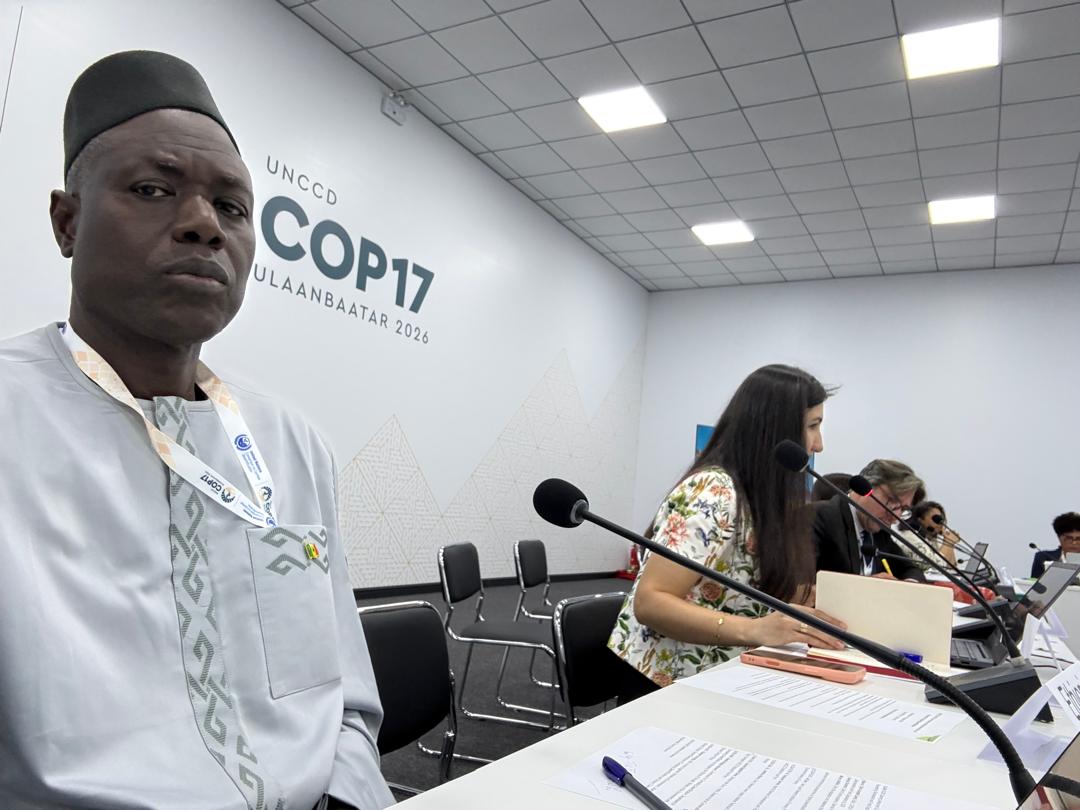
The fight against deforestation, forest degradation and desertification took center stage in discussions at the 17th Conference of the Parties (COP17) to the United Nations Convention to Combat Desertification (UNCCD).A side event dedicated to the “COP30 UNFCCC Forest Roadmap: Halting Deforestation and Forest Degradation, Tackling Desertification” brought together, on Tuesday, 18 August, representatives of States and several stakeholders involved in the sustainable management of forest ecosystems.Held in Room MET-06 from 1:00 p.m. to 2:30 p.m., the meeting provided an opportunity to present the main orientations of the COP30 Presidency’s Roadmap, aimed at halting and reversing deforestation and forest degradation by 2030.The initiative seeks to contribute to the implementation of paragraphs 33 and 34 of the first Global Stocktake under the Paris Agreement. In particular, it aims to identify the main drivers of deforestation and forest degradation while proposing policies, concrete measures and means of implementation.Prepared throughout 2026, the Roadmap is expected to be presented at COP31. It also seeks to highlight gaps and barriers that require strengthened international cooperation.Among the speakers invited to share national experiences and perspectives on combating desertification was Colonel-Major Babacar Dione, Director of Water, Forests, Hunting and Nature Conservation of Senegal and National Focal Point for the UNCCD.His participation was an important moment for Senegal, which used the opportunity to share its experience in combating desertification, restoring degraded land, protecting forest resources and conserving biodiversity.Colonel-Major Babacar Dione spoke during the session devoted to national experiences and perspectives on combating desertification, alongside representatives from China, Ethiopia, Brazil and Türkiye.His intervention helped place Senegal’s experience within international discussions on forest conservation and combating land degradation.The discussions highlighted the crucial role of forests in climate stability, ecosystem conservation, water cycles, food security, and the livelihoods of Indigenous peoples and local communities.In this context, forest conservation and restoration are emerging as essential levers for achieving the objectives of the Paris Agreement, protecting biodiversity and promoting sustainable development.The COP17 meeting also presented the different components of the forthcoming Roadmap, structured around several key areas: the drivers of deforestation and forest degradation and scalable solutions; policy, legal and institutional instruments; forest conservation, restoration and sustainable management; as well as financial mechanisms to support these efforts, including through carbon markets.International cooperation and capacity-building are also important components of this approach.A bridge between climate, desertification and biodiversityThrough this meeting, the COP30 Presidency is seeking to foster early dialogue with States and various stakeholders in order to refine the Roadmap’s priorities before its presentation at COP31.The participation of Senegal’s Desertification Focal Point, Colonel-Major Babacar Dione, gave particular significance to the discussions. Forests are at the heart of responses to climate change.His participation illustrates the importance of an integrated approach linking the fight against desertification, land restoration, sustainable forest management and adaptation to climate change.Senegal, which is facing the effects of land degradation and the growing impacts of climate change, therefore had an important platform to showcase its experience and contribute to international reflections on responses to these challenges.Following the presentation of the Roadmap by Marco Túlio Scarpelli Cabral, editor of the COP30 Presidency’s Roadmap, participants heard contributions from Xenya Scanlon, Chief of Communications, External Relations and Partnerships at the UNCCD, and Mirey Atallah, Head of the Adaptation and Resilience Branch of the Climate Change Division of the United Nations Environment Programme (UNEP).National experiences were subsequently presented by Jie Chen of the Chinese Academy of Forestry; Dr. Teshome Tamirat and Dr. Adefires Worku for Ethiopia; Colonel-Major Babacar Dione for Senegal; Sandra Regina Afonso for Brazil; and Güleser Avcıoğlu for Türkiye.The meeting concluded with a question-and-answer session and closing remarks.In Ulaanbaatar, Senegal’s voice thus joined an international debate in which combating deforestation, restoring degraded land and fighting desertification are increasingly recognized as interconnected challenges at the heart of climate action and sustainable development. babaclimat Agropasteur